When Communities Dance
“Imported hierarchies of classical and contemporary dance have contributed to the invisibility of local traditions.” Lubna Marium, renowned dancer, researcher and cultural activist
By Ayman Anika
Lubna Marium’s observation challenges a familiar picture of dance in Bangladesh. In urban cultural spaces, dance is often understood through recognised categories such as Bharatanatyam, Kathak, Odissi, Manipuri, folk and contemporary. Students learn codified techniques, rehearse choreographed pieces and perform under stage lights. Beyond these institutions, however, movement appears in forms that may not be formally labelled as dance at all.
It emerges during harvest celebrations, weddings, religious rituals, martial displays, storytelling sessions and seasonal festivals. It may take place in a courtyard, beside a river, around a shrine or in an open field. The performers may be farmers, craft workers, singers, village women, ritual specialists or members of Indigenous communities. In many cases, music, theatre, worship and dance exist together, making it difficult to separate one art form from another.
To understand the local dances of Bangladesh, we must therefore look beyond staged versions of “folk dance” and ask a more basic question: what counts as dance?


When movement belongs to everyday life
Bangladesh’s local dance traditions developed from the particular environments and experiences of its communities. Rivers, agriculture, religious belief, physical labour, courtship, conflict and communal celebration all shaped how people moved.
This is why many forms resist neat classification. Gambhira, for example, combines song, dialogue, satire and rhythmic movement. In Chapainawabganj and surrounding areas, its best-known format features a man and his maternal grandfather discussing social or political problems. The physical gestures and comic exchanges are essential to its appeal but calling it simply a dance would obscure its theatrical and musical dimensions.
Alkap, associated with the Rajshahi and Chapainawabganj region as well as neighbouring parts of West Bengal, similarly brings together music, dance, humour and dramatic presentation. Performers use entertainment to reflect on rural society, relationships and economic realities. These traditions show that local performance was not created only for beauty. It also provided a public language through which ordinary people could discuss power, hypocrisy and hardship.
Other forms preserve memories of physical defence. Dhali dance, literally meaning shield dance, enacts combat between performers carrying shields and sticks, wooden swords or spears. Lathikhela uses bamboo sticks, footwork, timing and coordinated attacks to display martial skill. Once connected to village defence, physical training and public fairs, these practices turn bodily discipline into spectacle.
Yet treating them merely as colourful festival items removes their deeper history. They preserve knowledge about balance, reflexes, rhythm, cooperation and courage. Marium points to girls in Narail practising lathikhela as evidence that traditions can also change. A practice historically dominated by men can become a way for girls to claim strength and visibility.
Circles of women
Some of the country’s most distinctive movement traditions have been carried by women, often outside formal institutions.
Dhamail, strongly associated with Sylhet and parts of greater Mymensingh, is performed primarily by women during weddings and other auspicious occasions. The dancers move in a circle, clap rhythmically and sing in call-and-response patterns. Many songs draw upon the love of Radha and Krishna, including compositions linked with Radharaman Dutta.
The circle is important. It creates a shared space without placing one performer permanently at the centre. Dance becomes social participation rather than an exhibition by a trained soloist. The women sing, move and sustain the rhythm together. Through repetition, younger participants learn by watching and joining.
Brata dances once accompanied vows and seasonal rituals performed by women and girls. Their gestures could refer to fertility, rain, crops, marriage or domestic wellbeing. These practices were not “dance productions” in the modern sense. They were part of a larger relationship between women, belief, household life and the agricultural calendar.
When a ritual disappears, its movements often disappear with it. Preserving only a reconstructed stage sequence may save the visible steps while losing the social world that gave those steps meaning.

Stories carried by the body
Manasa traditions offer one of the clearest examples of the complexity of Bengali cultural life. The stories of Manasa, the serpent goddess, appear in forms such as Behular Lachari, Manasar Bhasan, Podda Puran and Poddar Nachon. They recount the ordeal of Behula, who journeys with the body of her husband Lakhindar and challenges divine power in her struggle to restore him to life.
These stories are sung, enacted and danced in different ways across communities. Shadhona’s research identified several forms of “Poddar Gaan” in multiple districts. During Srabon Sankranti, some riverine communities also perform Shawoner Dala, travelling by boat while presenting episodes from the Manasa narrative.
What makes the tradition especially significant is that many of its practitioners are Muslim.
“The story belongs to the monsoon, rivers, snakes, fertility, illness, danger, healing, memory and the moral imagination of the community,” Marium explains. “It belongs to a shared landscape.”
A Muslim performer’s participation in a story about a Hindu goddess does not necessarily signal religious contradiction. The performance may be understood as inherited community knowledge, a vow, a dramatic role or a response to the dangers of a riverine environment.
“In many rural cultural performances, practitioners begin by invoking Allah, then the Prophet, and then Saraswati,” Marium says. “That layering is deeply embedded in community life.”

Such practices complicate attempts to divide Bengali culture into sealed religious compartments. As Marium puts it, “Bengal’s plurality was not designed by committees. It developed through everyday coexistence.”
Many communities, many movement languages
The dance heritage of Bangladesh is also inseparable from the country’s Indigenous and ethnic communities.
Among Manipuri communities in Moulvibazar, dance exists within Vaishnavite ritual and social life. Ras performances explore the relationship between Radha, Krishna and the gopis through controlled, rounded movement, devotional music and carefully developed costume traditions. Pung Cholom combines dance with vigorous drumming, while other ritual practices maintain community-specific movement vocabularies.
Marium cautions against assuming that every Manipuri community performance is identical to the codified classical form taught in urban academies. Through its Dhrumel project, Shadhona worked with Manipuri Theatre in Kamalganj to support community training in performance, theory, costume and instrument-making. The initiative recognised that a dance survives through an entire ecosystem, not through choreography alone.
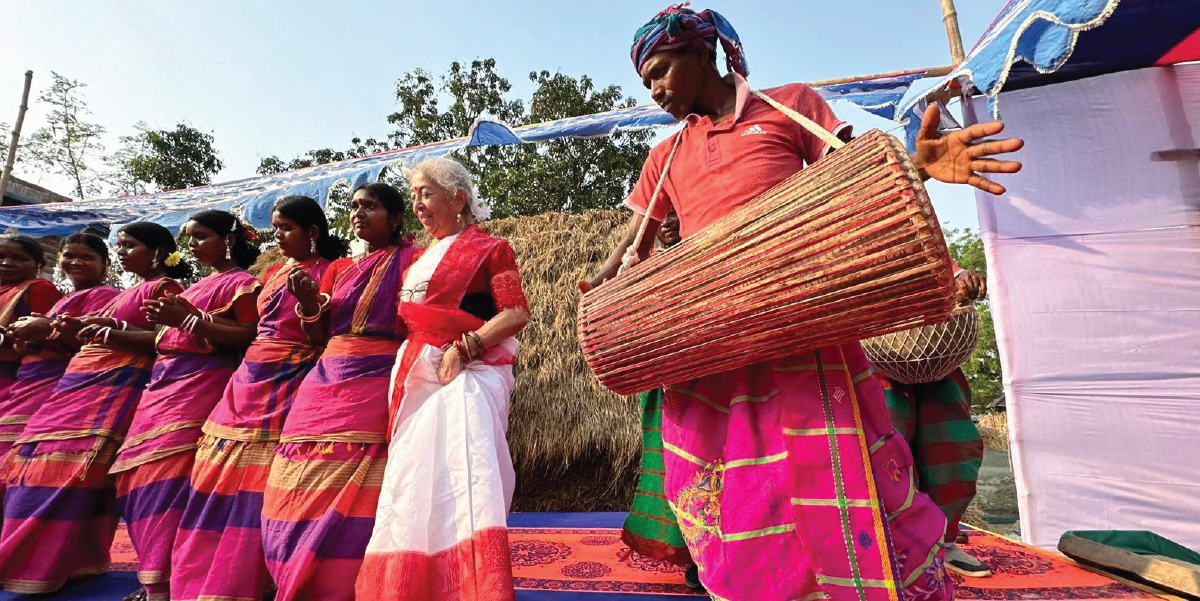
Similarly, Santal dances are closely tied to collective occasions such as harvests, weddings and festivals. Dancers frequently form lines or curved chains, moving through repeated steps that connect individual bodies to the group. Among Garo communities, Wangala celebrations traditionally mark the harvest and honour Misi Saljong, associated with fertility and crops. Drums, songs and communal movement turn agricultural gratitude into shared performance.
These traditions are sometimes grouped together under the convenient label “tribal dance.” The term reduces very different peoples to a single category and encourages organisers to present shortened, decorative versions at national programmes. Each community possesses its own history, language, belief systems and rules of participation. Respect begins with using the community’s name and recognising its members as knowledge-holders, not anonymous providers of cultural colour.
What disappears on the proscenium stage
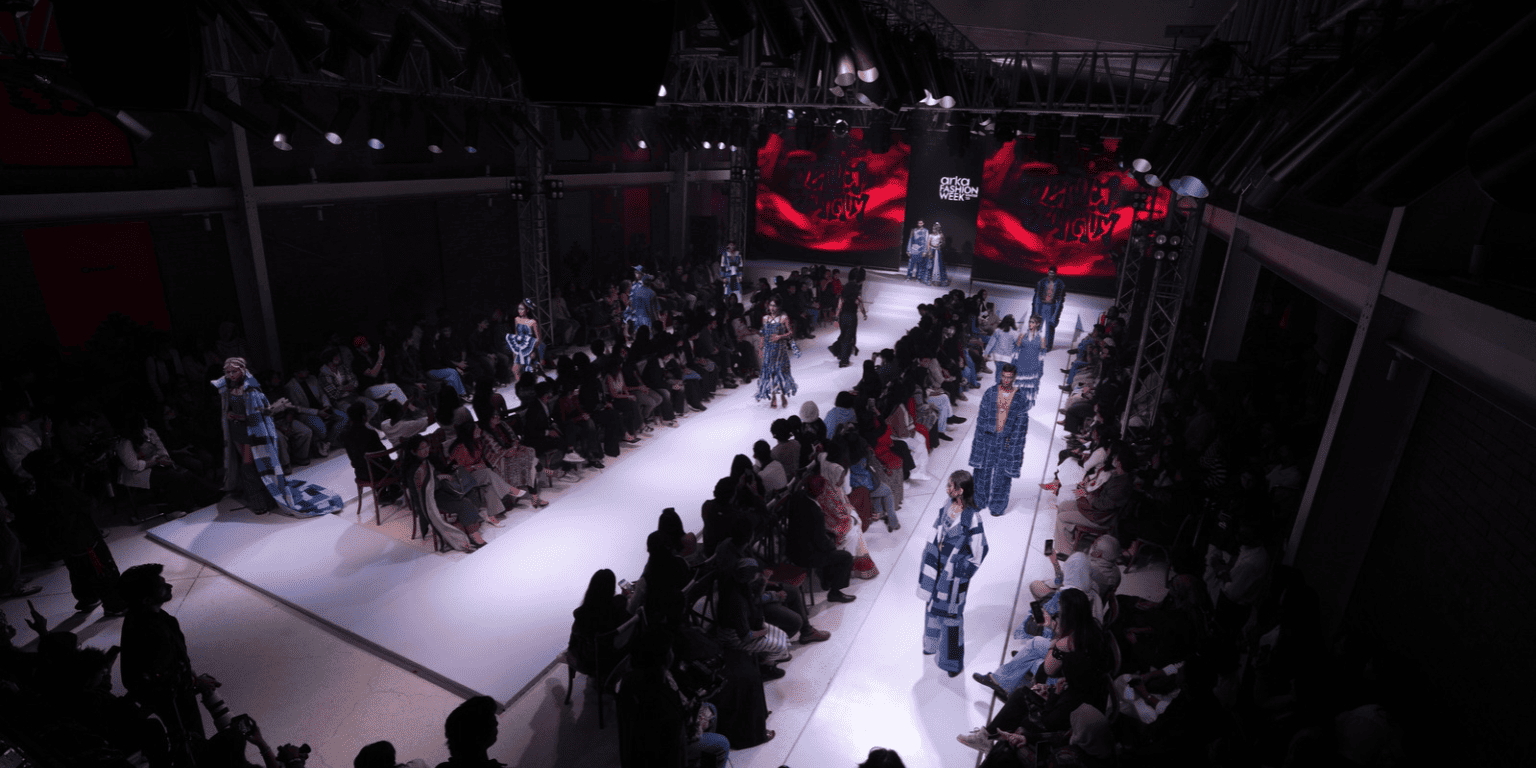
Moving a village tradition to an auditorium can offer performers recognition and income. It can also alter the form.
A circular dance may be rearranged to face an audience. A ritual lasting several hours may be reduced to seven minutes. Everyday clothing may be replaced by brighter “folk” costumes. Musicians might be placed behind the dancers, although they originally moved among them. Local variations may be removed to create one clean, teachable version.
“Variation is not a defect in living heritage,” says Marium. “Different villages, families, teachers or ritual groups may maintain different versions of the same practice.”
This distinction matters because safeguarding is not the same as freezing. A living tradition will change as communities change. The danger begins when an institution selects one version, calls it authentic and allows the others to disappear.
Documentation is important, but an archive cannot dance. “A digital archive cannot safeguard a tradition if practitioners cannot gather, teach, perform or earn a livelihood,” Marium argues.
UNESCO’s 2003 Convention for the Safeguarding of the Intangible Cultural Heritage similarly places communities at the centre of safeguarding. The aim is not simply to record a practice before it vanishes, but to support the conditions through which knowledge can be passed on. Bangladesh ratified the convention in 2009, creating a responsibility to identify and inventory its living heritage with community participation.


Seeing dance differently
Bangladesh does not lack dance traditions. It lacks sufficient cultural mapping, sustained research, local training opportunities and public recognition for the people who carry them.
Practitioners need spaces in which to teach. Young people need reasons to learn. Communities must have access to documentation made about them and a voice in deciding how their practices are presented. Researchers and choreographers must also credit the people whose movements, stories and knowledge inform new productions.

Most importantly, audiences must learn to see dance outside the familiar frame of the auditorium. A woman clapping in a Dhamail circle, a lathial shifting his weight before an attack, a Santal line moving as one body and a boatful of performers recounting Behula’s journey are not marginal curiosities. They are evidence of how people in this land have understood community, danger, devotion, pleasure and survival.
As Marium reminds us, dance is not only a sequence of steps. “The body possesses forms of knowledge and expression that cannot always be translated into speech.”
Recognising such embodied knowledge is therefore a matter of cognitive justice: it challenges the assumption that codified, institutionally sanctioned forms are the only valid measures of artistic knowledge. It also restores communities’ right to represent their worlds through their own movement languages, rather than allowing those languages to be dismissed as remnants of an archaic past.
Bangladesh’s local dances are part of that body of knowledge. If we fail to recognise the worlds around the movement, we may preserve a few steps onstage while losing the culture that taught them how to live.
Research references: Banglapedia on folk dances, Banglapedia on Dhamail, Shadhona’s work with Indigenous and local performing traditions, and UNESCO’s Convention for the Safeguarding of Intangible Cultural Heritage.