Old Dhaka, New Story: Rafiq Azam’s Architectural Journey Arrives in Malaysia
By Neha Shamim
The global journey of RAFIQ AZAM: OLD DHAKA, NEW STORY, Architecture in Bangladesh arrived in Kuala Lumpur on July 28, 2026, bringing together a major book launch and an immersive architectural exhibition that explored memory, landscape, culture, and community. Presented in collaboration with SHATOTTO architecture for green living, the Malaysian programme brought Prof. Ar. Rafiq Azam’s architectural practice into dialogue with audiences through both the printed page and a spatial experience inspired by his childhood memories of Old Dhaka.
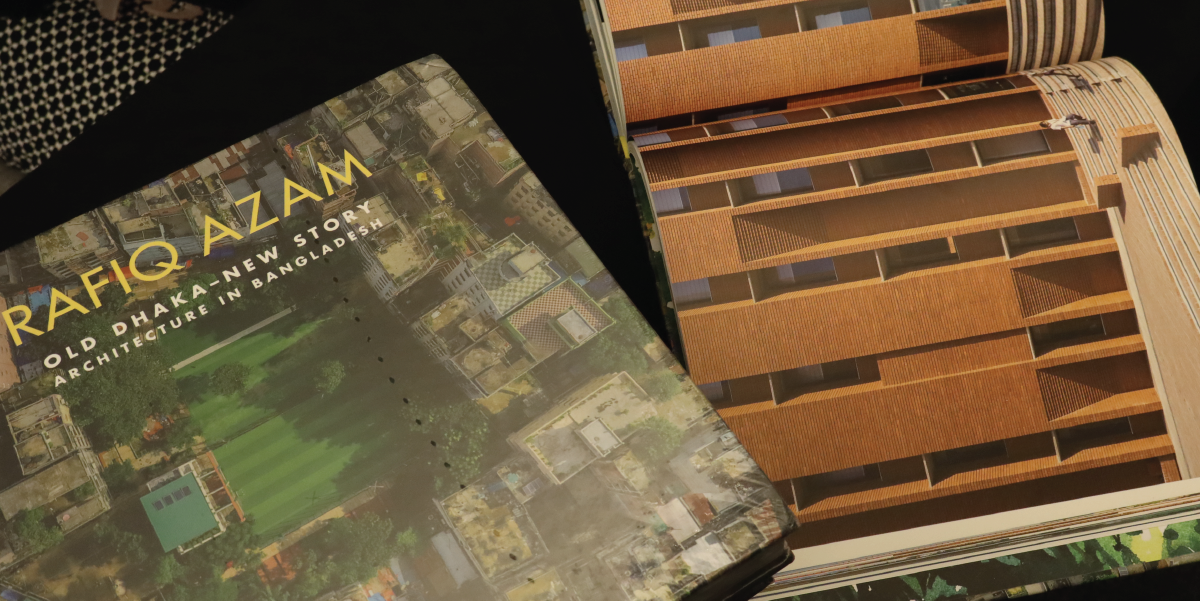
Published by Rizzoli New York and edited by Rosa Maria Falvo, RAFIQ AZAM: OLD DHAKA, NEW STORY, Architecture in Bangladesh traces Azam’s journey from the densely layered streets of Old Dhaka to the international architectural stage. His practice is shaped by an enduring relationship with watercolor, Bengal mysticism, light, water, landscape, and human experience, approaching architecture not simply as construction but as an expression of culture, ecology, and social responsibility.

The monograph brings together contributions from architectural thinkers including Kenneth Frampton, Prof. Shamsul Wares, Philip Goad, George Kunihiro, and Prof. Fuad H. Mallick, placing Bangladeshi architecture within a wider global discourse. Distributed by Rizzoli in more than 70 countries, the publication is set to reach major cultural institutions including MoMA in New York, Tate Modern in London, and Centre Pompidou in Paris, alongside international bookstores such as Barnes & Noble, Waterstones, and Kinokuniya.
The Kuala Lumpur launch took place at The Crave, The Toffee, bringing together architects, cultural figures, and members of the creative and diplomatic communities. Among those present were Chan Sau Yoong of Roca Malaysia, Dr. Ar. Tan Loke Mun, Ar. Lee Chor Wah, Ar. Dexter Koh Yew Peng, President of PAM, Ar. Zannat Jui, Goodwill Ambassador of “Connecting Creativity,” and Durjoy Rahman of Durjoy Bangladesh Foundation, Adviser to “Connecting Creativity.”

The programme included a lecture by Prof. Ar. Rafiq Azam, followed by a panel discussion featuring Ar. Wooi Lok Kuang, Dr. Veronica Ng, and Ar. Dexter Koh Yew Peng. Their conversation expanded the evening beyond Azam’s individual practice, examining the relationship between architecture, culture, regional identity, and contemporary design.
A significant moment of the evening was the formal launch of the monograph by H.E. Manjurul Karim Khan Chowdhury, High Commissioner of Bangladesh to Malaysia. The ceremony gave the publication a broader cultural and diplomatic significance, highlighting architecture as a means of creating connections between Bangladesh and Malaysia.
Running alongside the book launch was Azam’s Fifth Solo Architectural Exhibition, Old Dhaka – New Story: A Journey by Boat, presented at The Project Room (UR-MU), The Toffee from July 28 to August 23, 2026. While the monograph documents Azam’s architectural journey, the exhibition translates its central ideas into an immersive physical experience.
Inspired by Azam’s childhood journeys across the Buriganga River, A Journey by Boat invites visitors to encounter Old Dhaka as a living source of memory, imagination, and architectural inspiration. The experience begins with visitors symbolically “boarding” a wooden boat before moving through a sequence of installations incorporating large-scale aerial maps, architectural drawings, models, films, photography, soundscapes, and immersive projections.

Rather than presenting architecture as a collection of completed buildings, the exhibition uses movement, atmosphere, sound, and memory to explore the relationship between river, city, community, and built space. A reconstructed Old Dhaka alley forms the emotional centre of the exhibition, where a cinematic projection traces the transformative impact of Azam’s work across the city.
The projects featured include the Mayor Hanif Jam-e-Mosque, Rasulbagh Children’s Park, Osmani Udyan, Anguri Bari, neighbourhood revitalisation initiatives, and a wider programme that has sought to reconnect communities with nature through water, trees, courtyards, and shared civic spaces. Particular attention is given to the revitalisation of 31 neglected parks and playgrounds in Old Dhaka, transforming abandoned and often unsafe areas into more vibrant public landscapes for children and communities.
At the heart of this work is Azam’s belief that architecture should contribute to better lives. The exhibition concludes with two of his reflections: “Our city will become beautiful when the sound of the city is the giggling of children” and “Children should run after butterflies, not drugs.” Within the context of the exhibition, the words become a reminder that the value of architecture extends beyond form and structure to the lives and possibilities it creates.


The exhibition was curated by PDC — SHATOTTO architecture for green living, led by Shehab Rahmania, Head of PDC and Research & Curatorial Lead. Exhibition design was undertaken by Fabliha Al Tawaffin and N M Shamsul Islam, Research Architects at SHATOTTO architecture for green living. The exhibition was executed by Aaraf Dayad Azam and Fabliha Al Tawaffin, with its Malaysian setup by Huak Huak Sdn. Bhd. and media art handling by FILAMEN. The book launch was sponsored by ROCA Malaysia.
The Malaysian programme extended beyond the launch and exhibition. On July 31, Prof. Azam participated in DATUM KL 2026 at the Malaysia International Trade and Exhibition Centre (MITEC), as part of the Kuala Lumpur Architecture Festival. The event brought together architects and design enthusiasts for a series of presentations exploring contemporary architectural ideas and future possibilities. Speakers included Ar. Choo Gim Wah, Ar. Martin Jochman, Ar. Paola Cattarin, Ar. Lim Koon Park, and Ar. Otto Ng, with Prof. Azam’s presentation bringing the main programme to a close.
The Kuala Lumpur presentation forms part of a wider international journey that has taken RAFIQ AZAM: OLD DHAKA, NEW STORY, Architecture in Bangladesh through cities and institutions including the Sydney Opera House, International House of Japan in Tokyo, Barefoot Gallery in Colombo, Bengaluru, Pune, Yogyakarta, and other international destinations. In Malaysia, the journey expanded beyond a conventional book launch: the publication established the architectural narrative, while Old Dhaka – New Story: A Journey by Boat transformed that narrative into an experience.
Together, the book and exhibition offer two ways of understanding Azam’s practice. One documents a lifetime of architectural work and thought; the other invites audiences to move through the memories, landscapes, and social questions that have shaped it. In both, Old Dhaka remains more than a point of origin. It becomes a continuing source of ideas about how architecture can connect memory with place, culture with community, and the past with the future.