
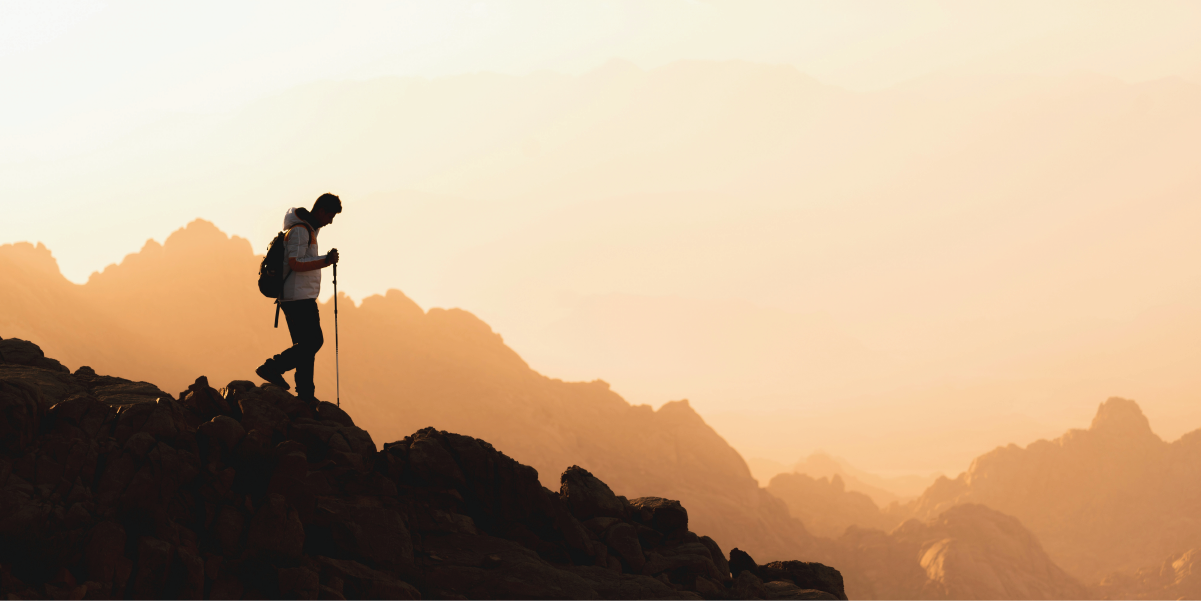
Somewhere over the mountain
By Abak Hussain
Nirmal Purja was a celebrity both inside and outside the climbing community, especially in his home country of Nepal. He was tough as nails, and had a pain threshold well above the average human’s; this much has been documented through medical tests.
Recently, he died on Pakistan’s Broad Peak along with a number of other climbers and guides. The Nepali national-level hero had just turned 43, and subsequently his “untimely” death resulted in a flurry of obituaries and tribute pieces. While highly respected for his climbing accomplishments, which are remarkable, some have also pointed out that his reputation was far from squeaky clean. There were harassment accusations against him, and many have found him to be uncompromising with whatever goal was in sight, risking the safety of those in his team. In the face of dangers or adverse weather condition, he was prone to pushing on instead of turning back. This kind of unyielding determination is perhaps a desirable, even necessary quality, for a mountain-climber of his level. But then, all kinds of ethical questions open up when you are responsible for the lives of others. “Quitting is not in the blood,” Purja is seen saying at one point in his Netflix documentary 14 Peaks: Nothing is Impossible. In this motivation-drenched era of social media, many youngsters eat up this kind of messaging like catnip. Push on, never give up, rise and grind: these ideas propel the high-altitude climber every step of the perilous journey. But quite often, as in the case of Nirmal Purja, and so many other climbers throughout history, this mindset results in disaster.
Climbing is a strange pursuit if you think about it. The risks are great, but nothing really tangible comes out of it. It’s not like you need to go fetch something from that peak, whether it be Everest, K2, Broad Peak, or the Eiger. Summitting won’t make the world a better place, feed hungry children, or even create an artwork of lasting worth. But you feel, somewhere at the peak, with a view of somewhere over the mountain, you will overcome something. Something you cannot quite articulate will become clear; the summit will elevate you. Is it any surprise that the word ‘mountain’ is synonymous for any long hard challenge, that ‘Everest’ is shorthand for your ultimate goal? “This is my Mount Everest,” we say, standing at the foot of a forbidding once-in-a-lifetime challenge. Climbers might tell you that Everest, though the highest, is not the hardest mountain to climb, but that does not diminish its symbolic value. Climbing is a spiritual quest, and we all have our mountains within us. For the likes of Nirmal Purja, these inner mountains are one and the same with actual mountains, and they tread this path with the shadow of death as their constant companion. But there is a great sense of tragedy in the deaths of non-professional climbers who may not have been fully cognizant of the risks.

Photo Source: Sylvain Mauroux
After reading a bunch of Purja obituaries, I did find myself drawn into the rabbit-hole of mountaineering. There is something primal in the appeal of proving yourself by venturing into some of the most inhospitable parts of the world. The air up in mountains is thin, and not meant for human breathing. The weather can kill you, a fall can kill you, altitude sickness or any number of ailments can kill you, hallucinations can make you lose your mind. Then there are countless human elements that could go wrong, because climbing, which is often done in groups, requires a lot of cooperation, and trust in the judgement of the leader. If the leader wants to turn back, you may not have much of a choice but to comply. On the other hand, if the leader says we go on, when you are starting to fear for your life, do you ignore your fears and listen to the boss, or do you try to retreat on your own, which is also hazardous in its own way?
I went back and viewed the 14 Peaks documentary with morbid fascination, which was a film made and distributed in Purja’s lifetime, but takes on a different, tragic sheen after his death. I read up on the literature on other missions, and wondered how I would fare in a situation like this, where the body and mind are pushed to an extreme. The idea of that level of suffering does not appeal to me, but on the other hand, it is hard to deny that climbing Everest would utterly transform your life, pulling you out of that gnawing feeling of midlife stagnation, and give you a first-hand epic tale to tell for the rest of your life. Reaching the summit and living to tell the tale is the ultimate flex. Yes, I do see the appeal. But … no.
The likes of Nirmal Purja, Reinhold Messner, or Alex Honnold are ultimately cut from slightly different cloth than those us of regular humans who have breaks in our systems. Most of us like a bit of the excitement which comes with risk, but we also wish to live to see another day. So how much risk is too much? These are existential questions we must all grapple with. Too much comfort blunts us and dulls our enjoyment of life, and growth always happens at the edge of our comfort zones. But as we get older our physical limitations simply cannot be ignored. This is why early-midlife climbers, I’m talking about fortysomethings, are in a perpetual danger zone. The mind still wants to lurch into the unknown. The body says easy there, I’m brittle.
Let me end with a passage from Jon Krakauer’s terrific book on an ill-fated Everest expedition of 1996. Into Thin Air (1997) is a first-hand journalistic account that has not been without its share of controversy, but it is a riveting read on the practical and psychological dimensions of climbing. Here’s the bit that really prompted in me a rush of thoughts: “Unfortunately, the sort of individual who is programmed to ignore personal distress and keep pushing for the top is frequently programmed to disregard signs of grave and imminent danger as well. This forms the nub of a dilemma that every Everest climber eventually comes up against: in order to succeed you must be exceedingly driven, but if you’re too driven you are likely to die. Above 26,000 feet, moreover, the line between appropriate zeal and reckless summit fever becomes grievously thin. Thus the slopes of Everest are littered with corpses.”
Had Nirmal Purja ever read Krakauer’s book? I have no idea, but it’s highly likely he had. I imagine him agreeing with these beautiful words of caution with a silent nod, and then, appetite whetted, proceeding to embark on his next climb.
Abak Hussain is Contributing Editor at MW Bangladesh.
Feature Image Source: NEOM